











Większość podróżnych, którzy po raz pierwszy trafiają do San Francisco Bay Area, ma w głowie raczej taki obrazek: Golden Gate spowity mgłą, tramwaje sunące po stromych ulicach i zapach oceanu mieszający się z aromatem kawy z hipsterskich kawiarni. San Francisco to przecież niekwestionowana ikona zachodniego wybrzeża.
Jednak na wschodnim brzegu zatoki, kilkanaście minut samochodem od Bay Bridge, leży Oakland – miasto o zupełnie odmiennej energii i historii. Dlaczego warto zjechać z utartego szlaku, żeby je odwiedzić?
Miasto oddychające różnorodnością
Oakland (nazwa pochodzi od angielskich słów oznaczających „krainę dębów”) jest najbardziej zróżnicowanym etnicznie miastem w USA.
W Oakland Chinatown, jednej z najstarszych dzielnic azjatyckich w Stanach Zjednoczonych, miejscowe targowiska pachną świeżym imbirem i suszonymi grzybami, a na rogu ulic wciąż działają małe, wielopokoleniowe herbaciarnie. Kilka przecznic dalej rozpościera się dziedzictwo afroamerykańskiej kultury i ruchów społecznych, które ukształtowały tożsamość miasta. To tutaj w 1966 r. narodziła się Partia Czarnych Panter (Black Panther Party).
Z kolei Fruitvale, przez miejscowych nazywanym „Fruit Loop”, jest sercem społeczności latynoskiej Oakland. Pełno tu kolorowych murali przedstawiających bohaterów walki o prawa imigrantów i ołtarzy stawianych na Día de los Muertos. Spacer przez Oakland jest jak podróż przez kontynenty – intensywna, różnorodna, szczera.
Lake Merritt – słone, miejskie lustro
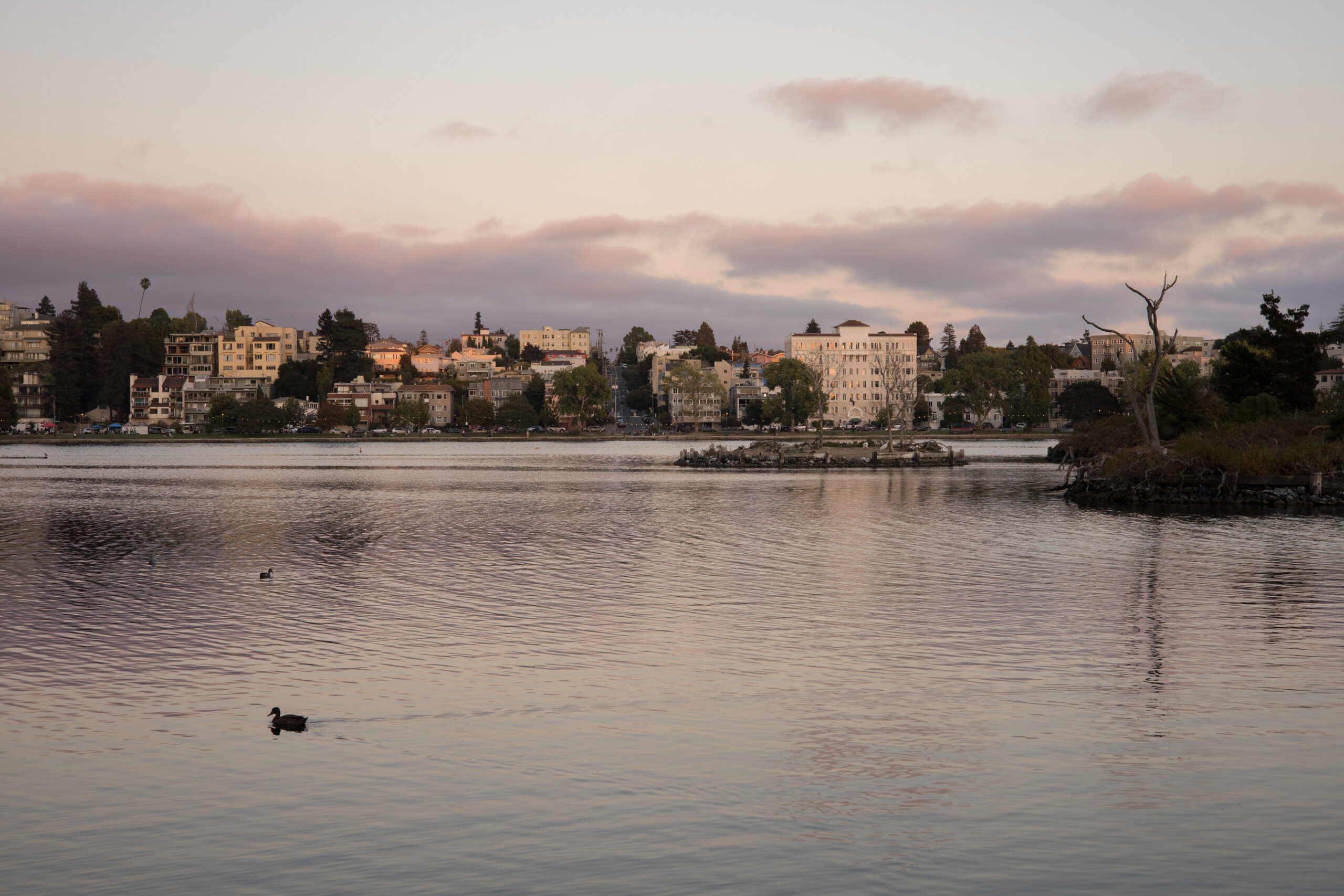
W centrum tej mozaiki znajduje się Jezioro Merritt – słona laguna, która nie jest zwykłym, miejskim akwenem.
Lake Merritt jest w rzeczywistości zatoką estuarną, połączoną z wodami Zatoki San Francisco. W 1870 r. stała się, pierwszym w kraju, miejskim rezerwatem dzikiej przyrody. Ta decyzja – pionierska jak na tamte czasy – zrodziła w Oakland tradycję troski o naturę. Mieszkańcy mówią czasem, że jezioro jest lustrem, w którym odbija się ich życie.
Wędrując wzdłuż ścieżki okrążającej jezioro, można obserwować rodziny piknikujące na trawnikach, biegaczy majaczących pośród palm, ludzi tańczących do muzyki z przenośnych głośników i wolontariuszy zbierających śmieci – bo Lake Merritt jest również obiektem lokalnej dumy.
Najbardziej charakterystycznym elementem jeziora jest Necklace of Lights, czyli naszyjnik świateł, otaczający akwen. Po raz pierwszy zapalony w 1925 r., stał się jednym z symboli Oakland. Po zmroku jego światła tańczą na wodzie, tworząc scenerię równie nastrojową jak ta w San Francisco, choć bardziej kameralną.
Oaza pośrodku metropolii
Lake Merritt jest również domem dla ogromnej różnorodności ptaków. Rezerwat obejmuje kilka stref siedliskowych, w których gniazdują kaczki krzyżówki, nurzyki, pelikany, czaple błękitne i setki innych gatunków. Wielu mieszkańców codziennie przynosi tu lornetki, by obserwować migracje ptaków wędrownych lub wysłuchać porannych koncertów natury.
W bezpośrednim sąsiedztwie znajduje się Rotary Nature Center, miejskie centrum edukacji przyrodniczej, które uczy, że wielkie metropolie i dzikie ekosystemy nie muszą być sobie przeciwne – mogą współistnieć.
Na południowej stronie jeziora leży Oakland Bonsai Garden. Przekraczając jego bramę, wkraczamy do innego wymiaru: cichego, skupionego, medytacyjnego. Miniaturowe drzewa, niektóre liczące ponad sto lat, tworzą żywą kolekcję sztuki pielęgnowanej z ogromnym pietyzmem.
Jezioro, które łączy
Lake Merritt to także przestrzeń spotkań ludzi o różnym pochodzeniu. W weekendy odbywają się tu targi ekologicznych produktów, joga na trawie, pokazy tańca i mniejsze oraz większe koncerty. Jezioro było i jest epicentrum ruchów obywatelskich Oakland. Jeśli w mieście organizowane są marsze, demonstracje czy manifestacje, to bardzo często startują właśnie tutaj.
Jezioro Merritt jest metaforą całego Oakland: miejscem tętniącym życiem, kolorowym, pełnym energii, ale też spokojnym, zapewniającym wytchnienie, budującym poczucie więzi. To jezioro, które – jak samo miasto – nie stara się być doskonałe. Stara się być sobą.
W okolicznych dzielnicach rozwinęła się bogata scena kulinarna. Małe kawiarnie i restauracje wzdłuż Grand Avenue i Lakeshore Avenue serwują dania z całego świata: od etiopskich injera i watów, przez koreańskie bibimbap, po fusion street food. Nad Jeziorem Merritt można więc dobrze zjeść.
Sztuka pozamuzelna
Street art w Oakland jest formą archiwum: świadectwem przemian, wydarzeń politycznych, kryzysów i nadziei. Murale w Uptown i w okolicach jeziora opowiadają o historii mieszkańców, o ich marzeniach, walce o równość i o ich codzienności pełnej wyzwań.
W pobliżu jeziora działa Oakland Museum of California, w sposób angażujący łączyce sztukę, historię i naukę. Muzeum prezentuje Bay Area z perspektywy ludzi, którzy ją tworzą: rdzennych mieszkańców, imigrantów, artystów, aktywistów, przedsiębiorców, rodzin od dekad związanych z tym miejscem.
też Miasto aktywizmu i odwagi
Oakland ma reputację miejsca odważnego, zaangażowanego i gotowego walczyć o sprawiedliwość. Aktywizm jest wpisany w jego DNA. W mieście nie brakuje lokalnych inicjatyw: ogrody społecznościowe, programy edukacyjne, warsztaty artystyczne, współdzielone pracownie i działania na rzecz ekologii.
W ostatnich latach Oakland staje się także centrum innowacji. Coraz więcej przedsiębiorców i artystów wybiera to miasto jako miejsce pracy. W dawnych magazynach i postindustrialnych budynkach powstają nowe przestrzenie coworkingowe, galerie sztuki i studia muzyczne.
Miejsce autentyczne i niedoskonałe
Oakland nie jest miastem idealnym, miejscami bywa bardzo niebezpieczne. Boryka się z kryzysem mieszkaniowym i z problemami, jakie niesie szybki rozwój gospodarczy. Jednak właśnie te sprzeczności sprawiają, że jest to miejsce do bólu autentyczne.
Dla podróżnych, którzy przybywają do Kalifornii, Oakland jest doświadczeniem nieoczywistym. Daje im dostęp do kultur, które rzadziej pojawiają się na turystycznych folderach, do społeczności otwartej i wielorakiej, a przede wszystkim – do przestrzeni, w której natura i miasto tworzą zaskakująco harmonijne połączenie.
